

What’s The Difference in a Deer’s Primary Scrape and Secondary Scrapes?
Primary scrapes are the main, repeatedly used scrapes that signal a buck’s core rutting activity and territory; secondary scrapes are smaller or incidental scrapes made by other bucks or during travel and are visited less predictably.
Quick comparison
Primary scrapes large, repeatedly refreshed; central to a buck’s rutting area
Secondary scrapes are smaller, sporadic; often along travel routes or made by subordinate bucks
What makes a scrape “primary” vs “secondary” ?
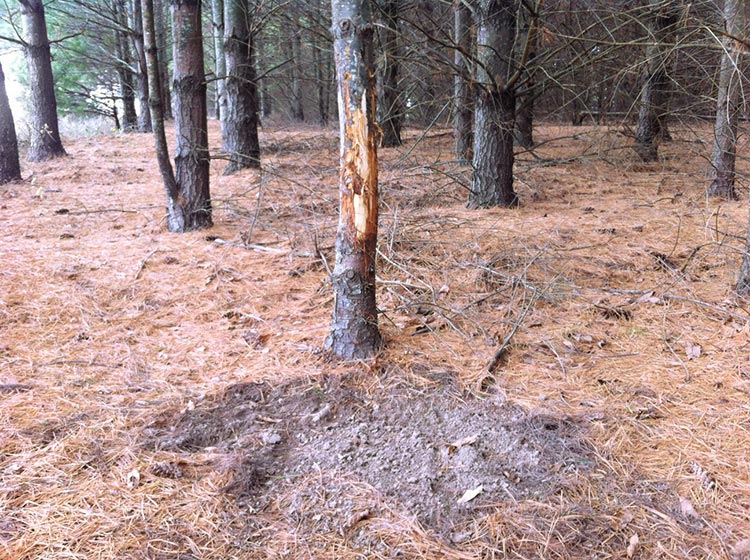
Primary scrapes are typically larger, kept active over days or weeks, and often have a prominent “overhanging” branch or rub above them. They function as communication hubs where bucks deposit urine, rub branches, and check scent to advertise dominance and detect does in estrus. Secondary scrapes tend to be smaller, shallower, and more randomly placed—they’re often created while a buck is moving between bedding and feeding areas or by younger/subordinate bucks that don’t hold a territory.
Why that matters for behavior and hunting
Primary scrapes attract repeated nighttime visits by mature bucks during pre‑rut and rut; they can indicate a buck’s core travel and social area. Secondary scrapes are less reliable indicators of a specific buck’s pattern and are more likely to be used briefly or by multiple animals.
How researchers and experienced hunters distinguish them
Look for frequency of fresh activity and size - complexity—primary scrapes are refreshed often and may have a well‑worn trail leading to them; secondary scrapes are more isolated and show less consistent fresh sign.
Historical observations and scent‑marking studies show that primary scrapes often sit near bedding or intersecting travel routes that bucks repeatedly use, while secondary scrapes are more opportunistic.
Practical tips
Check freshness daily: primary scrapes will show repeated fresh pawing and scenting.
Map scrape clusters: clusters with one dominant, frequently refreshed scrape usually indicate a primary site.
Watch travel routes: secondary scrapes often line corridors and edges rather than central hubs.
Read More
Categories:
Blog, Deer Scents